Aesthetic Matters. Strategy Matters More.

How to Build Product Photography That Supports Your Marketing Strategy

Image for Path Water showing their core products with a wide crop for flexibility to use across multiple channels.

Shot for Path Water’s Core line. Wide angle to increase flexibility for use across channels. ©Juj Winn

Every brand wants scroll stopping images - something that feels “on-trend” or “cool” or “fresh.” Bright colors, clean light, sparkly highlights, glossy reflections. There is nothing wrong with wanting your products to look good, and no one is suggesting that tapping into attention grabbing trends should be ignored. The problem is when the desire for a cool aesthetic overrides what you need to support your goals.

Strong product photography should work in service to your strategy. It helps shape perceptions, build trust, attract the right customers, and build on the story you want people to remember when they are choosing between you and your competitors. If you ignore strategy you limit what your photos can actually do for you.

START WITH THE GOAL, NOT THE VIBE

Before you think about choosing colors, props, or compositions you need to ask yourself, “What is this image or shoot supposed to accomplish?” Not “what should it look like” but “what should it do.”

When brands jump right to appearance and skip purpose the photography becomes disconnected from the rest of the marketing plan.

BUILD IMAGES THAT SOLVE PROBLEMS

Good product photography should make someone’s job easier.

Clarity reduces customer service issues.
Consistency strengthens recognition.
Thoughtful styling removes distraction and increases the number of ways an image can be used.

When you design your images around these needs you get assets that work across more channels and for a longer time.

MAKE CHOICES THAT SUPPORT YOUR BRAND VOICE

Every brand has a voice. Calm, playful, minimal, bold, approachable - whatever it is it should be visible in the imagery.

All the choices you make in deciding on an image communicate something. Lighting, color, props, and angles help set the tone. A clean composition can be read as trustworthy. A rich color palette can suggest warmth or luxury.

The key is cohesion. When brands match their photography to their voice the visuals become an extension of their identity. Cohesion gives you a competitive advantage because it builds memory.
(Check out my work for examples of intentional brand photography.)

REVERSE ENGINEER THE SHOT LIST

A strategic shoot doesn’t start with “what looks cool.” It starts with, “Where will these images live and what do they need to accomplish?”

Think about placement - homepage, paid social, Amazon, packaging, PDP, etc. Each placement has different needs.

When you build your shot list around those needs you end up with photography that performs better because it is made for its environment.

THINK BEYOND THE MOMENT

It’s easy to treat a photoshoot as a one off. But the brands that think a little more long term get a better value. They look where they are headed and ask for images that can support that growth.

This doesn’t mean you have to plan a year ahead. It simply means thinking about how your visuals will evolve so the assets you create today still make sense six months from now.

Images built with strategy in mind stay relevant longer. They help you build a library of assets that fit within a visual world instead of just a collection of unrelated shots.

AESTHETIC MATTERS - STRATEGY MATTERS MORE

Your product photos are often the first impression someone has of your brand. They’re also one of the most cost effective tools you have to communicate your intentions. The right images support your brand strategy at every level. They help you reach the right customers, refine your message, build trust, and define a visual identity that feels unmistakably you.

When you shift the conversation from “what should this look like” to “what should this do” the photography becomes more than just a pretty picture. It becomes a business tool that actually pays off.

If you’re interested in creating product photography that supports your strategy, get in touch. I’d be happy to talk through your next shoot.
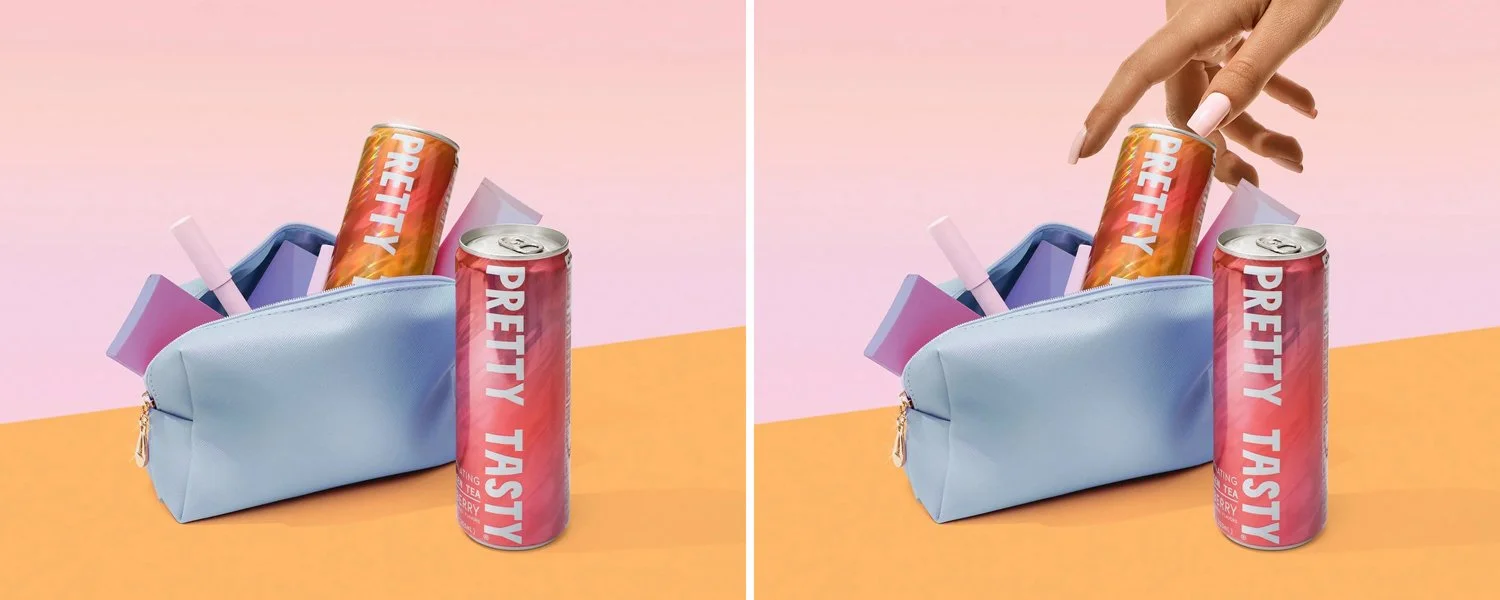
TINY GESTURES, BIG PSYCHOLOGY

the endowment effect, mirror neurons, and why hands sell

Every brand wants product photos that stand out, spark interest, and evoke a genuine emotional response. There are a million ways to get there, of course: fancy sets, big concepts, high-production everything. However, one of the most effective tools is ridiculously simple.

A hand.

Not a full model. Not a lifestyle scene with a dozen variables. Just a hand interacting with your product. This tiny detail makes a surprisingly big difference. Honestly, it feels a little unfair how well it works.

Hands combine psychology, storytelling, and strategy in ways that give a product an immediate advantage. If you’ve seen my portfolio, you may have noticed hands appearing here and there. It’s subtle, but very deliberate. The kind of deliberate where I’ll move a thumb by two millimeters fifteen times and feel oddly triumphant about it. Sometimes I even whisper “perfect” quietly to myself.

Here’s why.

There’s a psychological principle called the endowment effect. In simple terms, people value something more when they feel even a hint of ownership. When someone sees a product in a hand, their brain briefly substitutes in their own hand. For a moment, the product changes from “that thing” to “my thing.” This tiny sense of ownership, whether real or imagined, creates a connection. Connection makes people linger, click, explore, maybe even text a friend, “Have you tried this yet?”

Mirror neurons also play a role. Humans naturally mimic what they see. Show someone a hand opening a can or pouring a drink and their brain reacts as if they were doing it themselves. The effect is subtle but it builds engagement before they even notice. (Brains are wild, honestly.)

Hands also answer questions that people don’t know they’re asking:
How big is this? How does it feel? Does it open the way I think it does? Would it fit on my shelf, in my bag, in my morning routine?
When uncertainty decreases and confidence increases, everything else feels easier. That’s consumer behavior in a nutshell. It also explains why unboxing videos are so addictive. People just want to see how things truly behave.

Some brands avoid full lifestyle shoots because they can feel chaotic or off-brand (and honestly, they’re expensive.) Others focus so much on still life that the product starts to look like it exists in a vacuum. Hands land in the middle. They bring warmth and movement without creating clutter. You get personality and energy without hiring a full cast and crew, or scouting a location that “feels aspirational but not too aspirational.” The image still feels clean and polished.

Hands tell stories. Tiny ones, but good ones. Pulling a cold drink from a cooler. Dunking a crispy chip into a creamy dip. Choosing a gummy from a jar. A hand transforms those micro-moments into micro-stories, making the image feel like a real experience rather than a pretty setup. You can almost feel the chill of the can or the crunch of the chip, and that kind of sensory suggestion hits harder than most people realize.

They also perform a little compositional magic. A hand can guide the viewer’s eye exactly where it should go without shouting, “look over here!” This is classic visual psychology: gentle cues lead to stronger focus and better retention. Most people won’t notice it’s happening, and that’s the beauty of it.

Here’s something I’ve noticed over years in the studio. Sometimes, products can look a little too perfect. Too untouched, too sterile, too floating in space. A hand fixes that immediately. Suddenly it’s not just a can in beautiful light; it’s someone’s can, a drink they’re about to enjoy. The image shifts from “this is a product” to “this is a moment.” A small moment, sure, but still worth capturing. Little details matter more than you think.

Connection isn’t a coincidence. It’s design.

Hands create connection.
Connection leads to engagement.
Engagement is what gets someone to pause, click, explore. And that’s the goal, isn’t it?

Does that mean hands are right for every photo? No. But when an image needs a spark of life or a hint of humanity without venturing into full lifestyle territory, they’re often the smartest choice.

So why am I going on and on about all of this? Because the small choices in your visuals are the ones that end up mattering most. Hands aren’t a gimmick. They’re a strategic tool grounded in real psychology and genuine consumer behavior. Use them intentionally, and they make a product feel more tangible, inviting, and human. The best part is you don’t need a huge production day to make it happen. If a product can be held, a hand can make it resonate.

And honestly, I just love how much story you can squeeze into one small gesture.

Interested in making your products more engaging online and on the shelf? Let’s create some images that connect - with or without hands.